
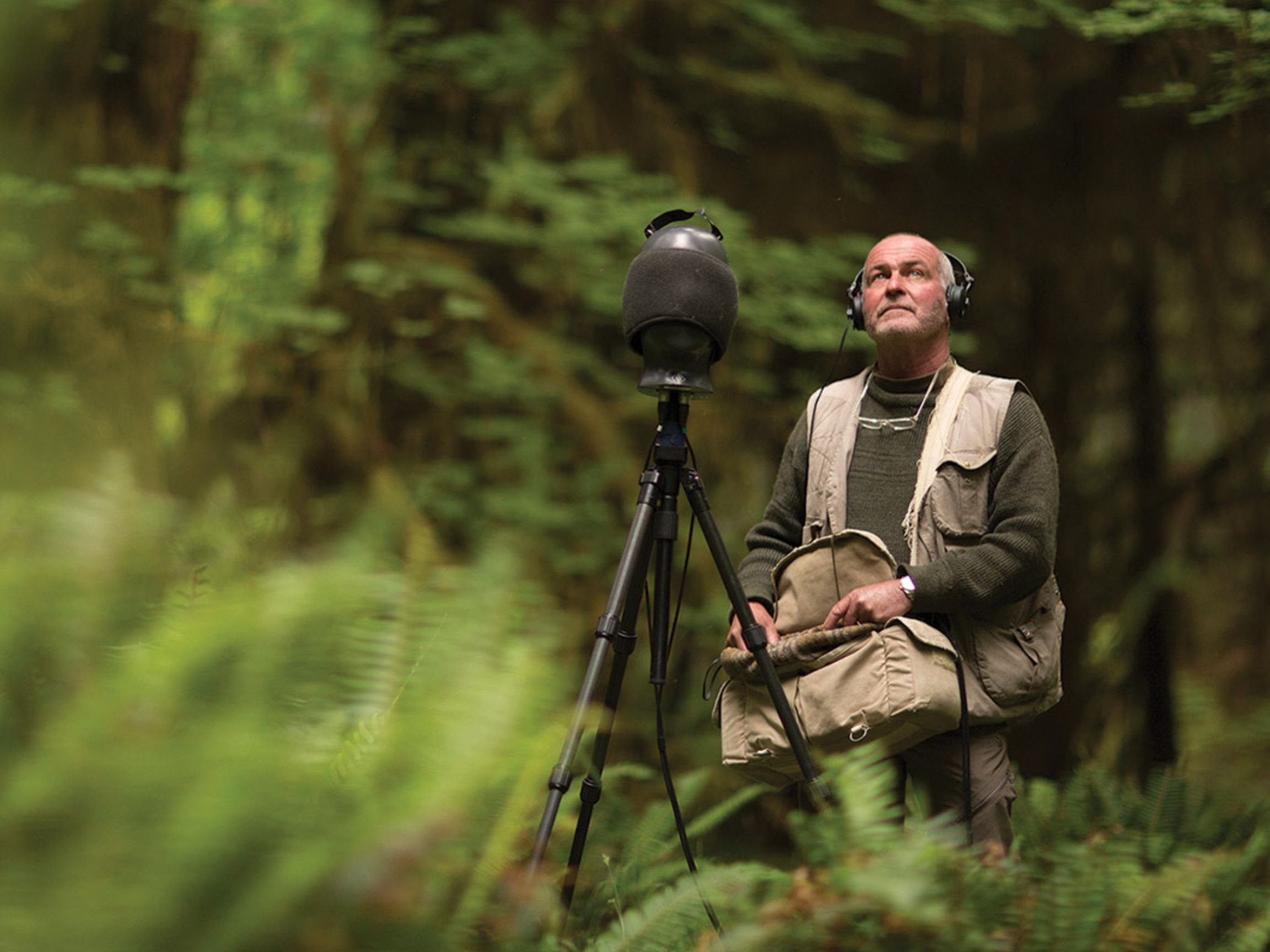
Most people imagine silence as the absence of sound. Gordon Hempton, the acoustic ecologist known as the “Sound Tracker,” sees it differently. For him, silence isn’t empty. It’s full.
For more than 35 years, Hempton has travelled the globe recording vanishing soundscapes and searching for the rarest sounds on Earth, among them, true silence. Along the way, he co-founded Quiet Parks International, an organization dedicated to protecting natural quiet spaces around the world.
In an exclusive interview with Silent Focus, we asked Hempton a simple question: What does a silent retreat actually sound like?
According to Hempton, the answer begins with learning how to listen.
We Have Forgotten Our First Language
One of the first things Hempton said during our conversation is that our first language isn’t English, Spanish, or any other spoken language.
“Our first language is noticing what you feel. Because you are feeling through your senses.”
For most of human history, our ancestors experienced the world through their senses. They listened to the sounds around them, observed changes in their environment, and paid attention to what those experiences made them feel. Long before language became our primary way of understanding the world, listening helped us make sense of it.
For Hempton, silence offers a way to reconnect with this forgotten language. In quiet places, free from distraction, we become more aware of our surroundings and more attuned to our own thoughts, emotions, and sensations.
A silent retreat, then, is not simply an escape from noise, but an opportunity to rediscover a deeper way of listening, one that has been part of us all along. In that sense, the sound of a silent retreat is not emptiness, but the gradual return of our ability to notice.
Why Noise Exhausts Us
Yet reconnecting with this deeper way of listening has become increasingly difficult in modern life. Cities are louder than ever, everyone has endless to-do lists, and as if that wasn’t enough, technology has made it so that we are facing constant stimulation. Notifications, screens, and a never-ending stream of information compete for our attention, leaving little room to simply notice what we feel.
But according to Hempton, the problem goes deeper than distraction. Humans evolved in environments where being able to hear subtle sounds was essential for survival. The rustle of leaves, distant water, birdsong, or the approach of another living being all provided important information about the world around us.
Today, many of those meaningful sounds are masked by traffic, machinery, aircraft, and the constant hum of modern life.
“If you can’t hear the faint sounds, your brain will feel insecure.”
That feeling of insecurity may help explain why so many people experience chronic stress, overwhelm, and burnout. According to Hempton, it is a primal reaction. In a noisy environment, the brain remains on alert, unable to fully relax into a sense of safety and awareness.
This all translates to a single idea: If constant noise and stimulation disconnect us from our senses, then silence may be more than a luxury, it may be an essential tool for restoring clarity, focus, and wellbeing.
The Three Sounds We Need
Hempton says that for humans to feel safe in a space, they need to fulfill three sonic qualities:
1. Security
Security is, as mentioned before, the absence of threatening noise, the complete awareness of your surroundings, the feeling of safety.
2. Prosperity
We are naturally wired to want to hear the sounds of life, because they represent food, water and shelter. The key indicator of prosperity for human beings is the presence of songbirds. In fact, Hempton says our ears are better tuned to hear bird song than even the human voice. This is why silent retreats are often in natural areas, and birds are present.
3. Intimacy
The last and most important quality is intimacy. The way Hempton described this third piece of the puzzle is beautiful:
Imagine you are alone, in the wilderness. There are only faint sounds present. You can hear bird songs, insects, and the seeds dropping out of the trees. Slowly the sun begins to set, and as the night cools you notice the thrill of an insect starts to slow down. At this moment, Gordon explains, you develop a relationship with that insect who is also feeling the falling temperatures. You have companionship, you have another living being experiencing, in some way, what you are also experiencing. You are no longer alone.
The answer to our original question begins to emerge here. A silent retreat does not sound empty. It sounds alive. The birds, insects, wind, and other subtle sounds of nature create the conditions that Hempton believes humans need to feel safe, prosperous, and connected.
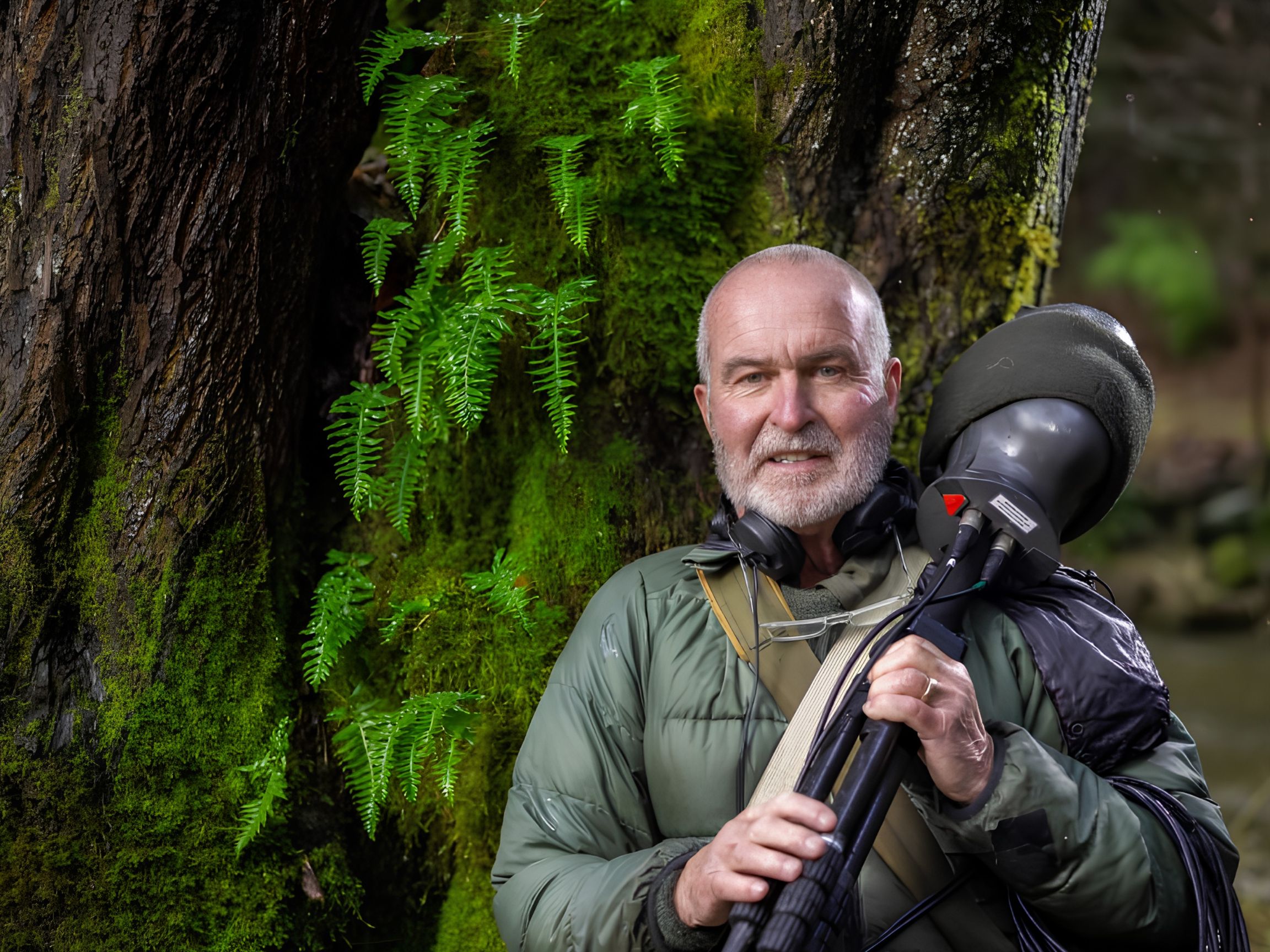
Photo: Gordon Hempton in Slowdown Magazine
Silence Is Not Empty
“The importance of silence is not that it’s devoid of life, but that it’s filled with life.”
A silent retreat sounds like life.
Still, despite this, many people are still uncomfortable with silence. We fill empty moments with music, podcasts, television, notifications, and conversation. As Hempton sees it, this isn’t because silence is unpleasant, but because many of us have forgotten how to experience it.
Silence is not a form of deprivation, silence creates space. It allows us to notice that in our list of infinite to-do’s, not everything is worth our time. Priorities come into focus. We begin to recognize what truly matters.
Hempton shared a story from his own life to illustrate this point. At one stage, he found himself overwhelmed by a ten-page to-do list. But after spending time in silence, his perspective shifted.
“How did I become so distracted by all these unnecessary things?”
The list itself had not changed. What had changed was his ability to see it clearly.
This may be one of the greatest gifts of a silent retreat. It does not provide answers or solve our problems for us. Instead, it removes enough noise for us to hear ourselves think again. In a world that constantly competes for our attention, silence offers something increasingly rare: clarity.
The Amazon: Gordon Hempton’s Church
As we dove deeper into Gordon’s story, he spoke about one silent spot he continues to return to: the Ecuadorian Amazon.
“This is my church,” he said.
The statement speaks to the profound sense of connection he experiences in the rainforest. Surrounded by the sounds of birds, insects, wind, and water, he finds something that modern life often makes difficult to access: perspective.
Hempton explained that whenever he returns to the Amazon, something shifts.
“I come back not as a busy person, but as a person who’s happy to be alive.”
It is a simple statement, but perhaps it captures the purpose of silence better than anything else. It reminds us of something we easily forget: that being alive is enough.
Perhaps that is why silent retreats can feel so transformative. They offer a temporary return to the same lesson Hempton finds in the Amazon: a chance to step away from the noise, reconnect with the living world, and remember who we are beneath all the distractions.
What Happens After a Silent Retreat?
Just as Gordon returns from the Amazon feeling transformed, many people leave a silent retreat with a renewed sense of clarity and connection. However, according to Hempton, the journey does not end when the retreat is over.
Instead, you enter what he calls the “Afterzone”: the period of transition between the retreat experience and everyday life.
Hempton explained that after returning from the Amazon, he intentionally gives himself time before jumping back into work.
“I have three days which show that I’m still in the Amazon, but I’m actually back home. Because I want to make myself available to my family and not go straight back to work.”
The same principle applies after a silent retreat. Rather than rushing back into emails, meetings, and daily responsibilities, it can be helpful to create space for reflection. Spend time with family and friends, share what you learned, and allow the experience to settle.
For Hempton, silence is not something that should be left behind when the retreat ends. It is something that can be woven into everyday life. Whether it’s taking five minutes to sit quietly, going for a mindful walk, or simply paying attention to the sounds around you, these small moments help keep the experience alive.
Ultimately, a silent retreat is not a single event, but the beginning of an ongoing practice. The goal is not to escape from life, but to return to it with greater awareness, carrying a little of that silence with you wherever you go.
Silence Must Be Experienced
After decades spent tracking endangered soundscapes across the globe, Hempton still returns to the same lesson.
“Silence must be experienced to be known and appreciated.”
Silence isn’t something we find. It’s something we surrender to. In that surrender, we may finally hear what we’ve been missing.
A silent retreat offers an opportunity to do exactly that. It is a chance to step away from the noise of daily life and enter a space where clarity, awareness, and deep listening can emerge. Guided by silence, we begin to notice not only the world around us, but also ourselves.
So what does a silent retreat sound like?
According to Gordon Hempton, it sounds like birdsong carried in the wind. It sounds like insects communicating at dusk. It sounds like the rustle of leaves and the flow of water. It sounds like the presence of life.
But perhaps most importantly, it sounds like coming home to a part of ourselves that has been there all along, quietly waiting to be heard.
Ready to experience this for yourself, or simply want to learn more?
You can explore more of Gordon Hempton’s work through his website, Sound Tracker, and his book Earth Is a Solar Powered Jukebox, a guide to listening, recording, and understanding the sounds of the natural world.
If you’d like to learn more about silence, mindful living, and silent retreats, follow us on Instagram @silentfocus.co and subscribe to our newsletter for more articles, insights, and inspiration.