When Work Leaves No Room for Creativity
Most modern jobs require constant problem-solving and decision-making. Once you find a way that works, you stick to that. And unless you’re in a line of work that inherently asks you to be creative and step outside of that box, the box becomes your safe space. Therefore, many people rarely engage in creativity for its own sake, and then creativity becomes something that is viewed as a luxury rather than a necessity.
However, research increasingly suggests that creative expression is not just enjoyable. It can play an important role in mental health, wellbeing, stress reduction, and emotional resilience.
What Is Creative Expression?
Creative expression is simply the act of using creativity to communicate thoughts, feelings, experiences, or ideas. It can take many forms, from drawing and painting to writing, music, photography, or even creating something with natural materials.
Most importantly, creative expression is not about being talented or creating something perfect. It is about giving yourself the space to explore, create, and express what is happening internally.
The Link Between Creativity and Mental Health
Creativity gives the mind a different type of focus.
Engaging in creative processes plays a crucial role in emotional regulation, as creative activities provide an outlet for emotional expression. This way, individuals can process and manage their overwhelming emotions effectively.
Not only that, but creativity fosters cognitive flexibility. Cognitive flexibility allows your brain to adjust its activity and avoid rigid, habitual responses when circumstances change (which is exactly what happens when you stay inside the box). It acts as the opposite of being “stuck in a rut”. The benefits include enhanced resilience, adaptability, and coping skills, thus promoting positive mental health outcomes
Creativity allows people to engage with thoughts and emotions in a way that words alone sometimes cannot, and at the same time exercises their brain.
The Science Behind Creativity and Wellbeing
Stress Reduction and Cortisol
Scientific research confirms that engaging in creative activities like drawing, painting, or playing an instrument can significantly reduce cortisol levels, often lowering stress markers within just 45 minutes.
Dopamine and Reward
Creative activities actively stimulate the brain’s reward centers, triggering the release of dopamine. Engaging in art, music, or writing activates the medial prefrontal cortex and mesolimbic pathways, which foster positive emotions, enhance cognitive flexibility, and lower stress, even if you are just doodling or coloring.
Flow States
Engaging in creativity can also trigger a flow state, a state of complete absorption in the present. This is a kind of mindfulness that allows for your mind to reduce mental clutter, pushing worries and anxieties to the background, increasing focus and promoting relaxation.
Why Creativity Matters in the Workplace
As we have talked about in our article (The Pressure to Perform: Masculinity and Burnout in Men), burnout is a state of physical, emotional, and mental fatigue normally caused by information overload, prolonged, unmanaged stress which is typically related to work, or intense long-term pressure.
However, creativity helps employees reset mentally and approach challenges differently. It encourages problem-solving, sparks new ideas, and can make work feel more engaging and meaningful. When people are given space to think creatively, they often become more adaptable, curious, and open to new approaches. This not only benefits individuals, but can also help teams collaborate more effectively and support innovation within an organization.
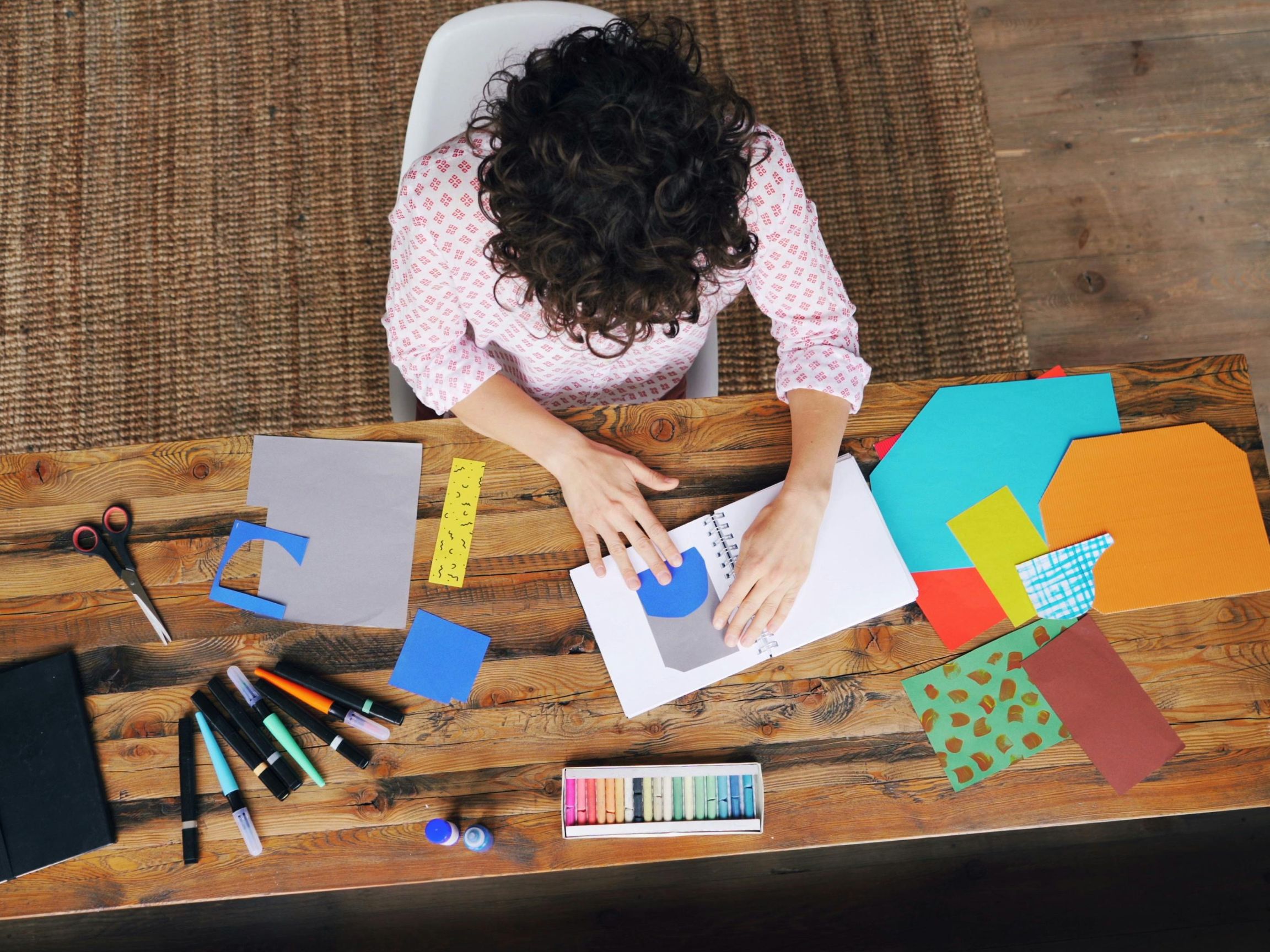
Creative Activities for Teams and Retreats
One of the reasons creativity is such a valuable part of corporate retreats is that it encourages people to slow down, become present, and engage with one another in a different way.
Unlike traditional discussions or workshops, creative activities allow participants to reflect, communicate, and explore ideas without relying solely on words.
Here are some activities often used at retreats:
Nature art
Participants create temporary artworks using natural materials such as leaves, sticks, stones, flowers, or shells. Because the focus is on the process rather than the outcome, making art with nature invites people to pay closer attention to their surroundings.
Mandalas
Through drawing, colouring, or arranging natural materials into circular patterns, mandalas encourage focus, calm, and a sense of community when created as a group. If you want to learn more about the history and types of mandalas, you can read this article.
Symbol-based activities
Here participants explore symbols, imagery, and personal intentions through art. These exercises encourage reflection and self-discovery, helping people connect with their values, goals, and current life experiences in a creative and non-verbal way.
Vision Boards
In our article Goal Setting on Retreat: The Power of Vision Boards, we explore how for leadership retreats and corporate groups, vision boards can be a valuable tool for goal setting and strategic thinking. By combining images, words, and ideas that represent future aspirations, participants create a visual representation of what they want to achieve. This process encourages reflection, clarifies priorities, and can help transform abstract goals into something more tangible.
These activities count as a form of rest, not distraction. While scrolling, streaming, and consuming content can provide temporary relief from stress or boredom, these forms of mindfulness allow the mind, body, or nervous system to recover.
How to Bring More Creativity Into Your Workday
Sometimes the mind does not need more information. It needs a different way of engaging with the world.
In your day to day try:
- doodling during reflection time
- journaling
- photography walks
- sketching
- mindful colouring
- creative workshops
- limiting screen time
Creativity Is Not a Luxury
Research shows that creativity has many physical and mental benefits, but perhaps the most interesting thing is that you do not need a scientific study to experience them. Creativity is a natural part of being human. When we create, we often feel more present, engaged, and connected, sometimes within minutes. The research simply helps explain what many people have known all along.
In a culture that often prioritizes productivity above all else, creativity reminds us that some of our best ideas, deepest insights, and greatest moments of wellbeing emerge when we give ourselves permission to create.
Creativity is not a distraction from meaningful work. Often, it is what helps us do our best work in the first place.
Follow us on Instagram to learn more about wellbeing, creativity, retreats and silence @silentfocus.co, and if you like this style of content join our newsletter.