Planning Without Constant Pressure
At some point in your life you have probably been gifted a planner. Maybe it was when joining a new company, during a birthday, or a season where everyone suddenly decides they are going to “get their life together.” You probably used it to set reminders, appointments, and make to-do lists. But did you know that your planner doesn’t just have to organize your life? It can also help calm your mind.
Planners are often focused on productivity and deadlines, which can help with organization, but can also lead to feeling overwhelmed and mentally overstimulated. This is where the stillness planner comes in. It helps organize your life while also creating space for calm and reflection.
What Is a Stillness Planner?
A stillness planner is a journal, or planner, designed to combine productivity with mindfulness. It helps people intentionally slow down, reflect, and create moments of calm throughout the day.
How a Stillness Planner Differs From a Traditional Agenda?
Traditional planners are often designed around productivity, efficiency, and time management. While this can be useful, it can also contribute to the feeling that every moment of the day needs to be filled with tasks and obligations.
In many cases, writing down a list of endless tasks every morning is not really planning, it is reacting in advance. This is the mindset that a traditional planner could put you in, it can reinforce a cycle of urgency and overstimulation where the day is driven by external demands rather than intentional choices.
A stillness planner takes a different approach. Rather than focusing only on what you need to do, it also encourages you to reflect on how you want to feel while doing it. In a stillness planner, the goal is not to constantly fill space, but to consciously create it. This means planning your life with greater awareness, rather than simply reacting to everything around you.
What Is Usually Included in a Stillness Planner?
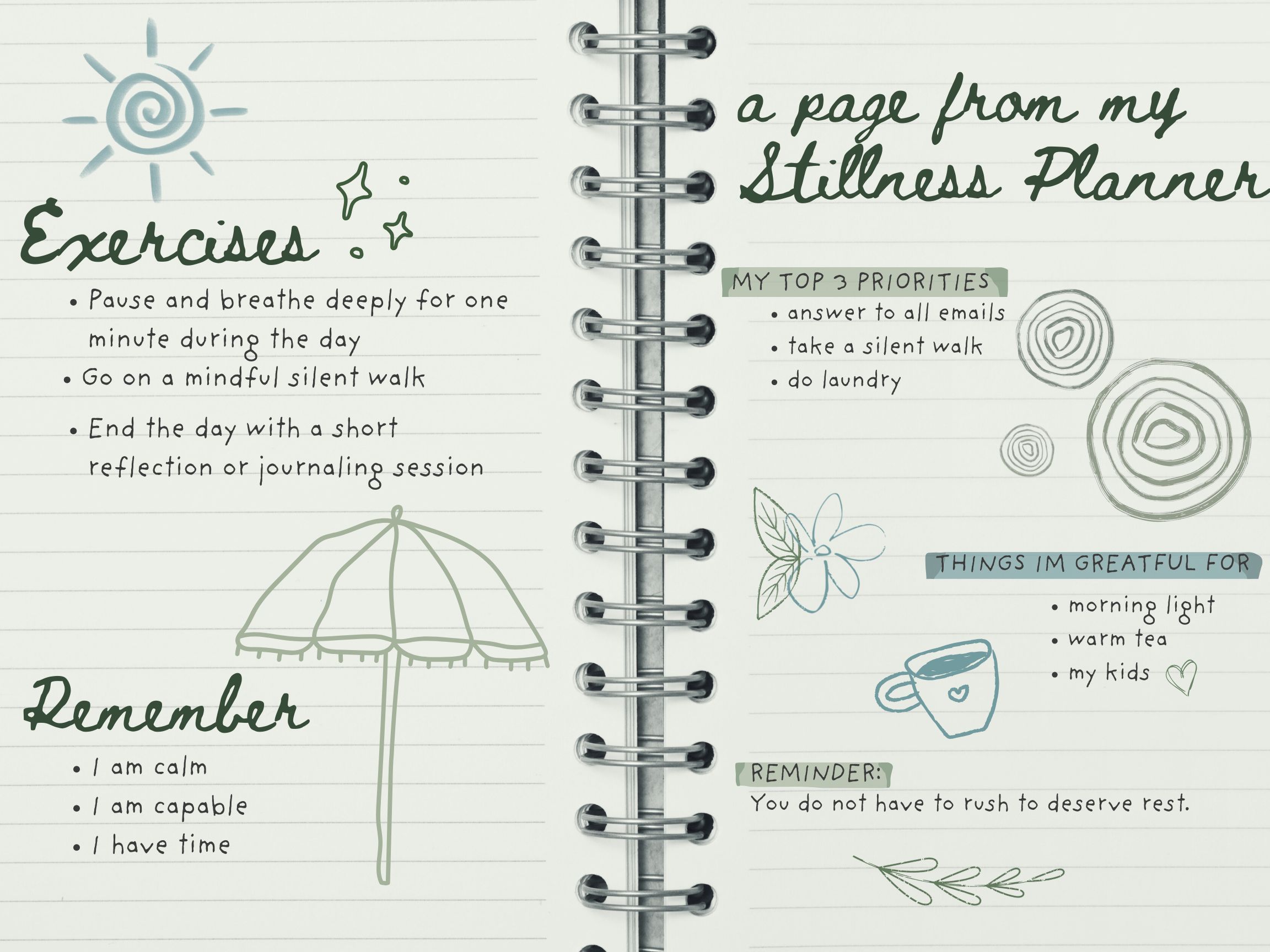
A stillness planner is very personalized, there is no right way to do it, just the way that is best for you. Here is an example of what your stillness planner could look like, or a base for you to start with if you are not sure how:
Morning intentions
- Highly recommended to set the emotional tone for the day.
- Try following the prompt: How do I want to feel today?
- You can also make it a Sankalpa, a Sanskrit term for a heartfelt intention, used in yoga and meditation to guide life toward its highest purpose. Try putting your morning intention in the present tense such as “I am calm” and repeat this several times with your eyes closed so you feel it in your body, in your mind and in your soul.
Mindful planning
This means organising your time around your values, energy, and wellbeing. So, in this section:
- List only your 1-3 top priorities for the day.
- Leave 10–15 minute buffers between tasks for breaks and unexpected interruptions.
Additionally, instead of just planning your day around tangible tasks you have to complete, plan it around the mentality of what kind of person you want to be that day. Think to yourself: “What kind of husband/wife/father/mother/boss/employee do I want to be?”
Gratitude practice
Practicing gratitude is a positive psychology tool, shown to boost happiness, increase optimism, and even improve physical health by reducing stress.
- Set aside a few minutes to think about what you’re grateful for, then make a list of 3-5 specific things.
- You can also write down things that happened to you during the day that you particularly enjoyed.
Reflection prompts
Along with writing what you are grateful for you can also write down a small reflection of how your day went. This is a powerful habit that acts as a “mental detox,” reducing stress, increasing self-awareness, and improving sleep quality. It allows you to process emotions, learn from mistakes, and celebrate small wins, helping you move from simply “living” to intentionally growing. It can be as short as one sentence, or as long as you need. Some prompts are:
- What gave me energy?
- What drained me?
- What challenged me?
- What did I learn?
These kinds of reflections can help you improve your mindful planning little by little each day, letting go of things that maybe are not a priority for you, and focusing on what brings you fulfillment.
Stillness exercises
You can always scatter some exercises in your planner, and pick one or two to do each day. For example:
- Not picking up your phone for the first 15 minutes of your day.
- Having a mindful silent walk.
- Setting aside 10 minutes of your day where you are not listening to music, podcasts, audiobooks…just you and your thoughts.
- Meditation! And practicing some breathing techniques.
- Even just stretching between long periods of sitting down.
How Stillness Planners Help You Stay Present
A stillness planner has several benefits, such as:
- Greater Focus and Productivity: Prioritizing what truly matters can help you work more clearly and effectively, rather than becoming overwhelmed by endless tasks.
- Improved Wellbeing: Spending more time on meaningful activities can create a stronger sense of balance, purpose, and fulfillment in daily life.
- A Healthier Work-Life Balance: Intentional planning helps create space not only for work, but also for rest, personal interests, and moments of calm.
Stillness planners interrupt the autopilot behaviour of “reacting”. This change in behaviour leads to:
- Mental clarity: feeling less overwhelmed and clearer focus.
- Emotional awareness: noticing stress before burnout.
- Encourages mindfulness: bringing attention back to the present moment, promoting intentional living.
Creating Space in Your Day
Next time you sit down to plan your day, keep it simple. Narrow down your priorities and make space for mental rest. Each day, try adding different elements (reflections and/or mindfulness exercises). Focus on consistency, not perfection.
Most importantly, use your planner as a guide, not another pressure tool. A stillness planner is not about doing less or becoming “perfect” at mindfulness. It is about moving through life more intentionally, with greater awareness of your time, energy, and attention.
In a world built around constant movement and stimulation, even a few moments of reflection can help bring more clarity, presence, and balance into everyday life.
Learn more about how to cultivate silence on our Instagram @silentfocus.co, and if you like this style of content join our newsletter.