

When Was the Last Time Something Truly Amazed You?
Personally, I love spending time with children. Although they can be a handful, and it sometimes takes a lot of energy to keep up with them, I often leave feeling as though they have given me energy in return.
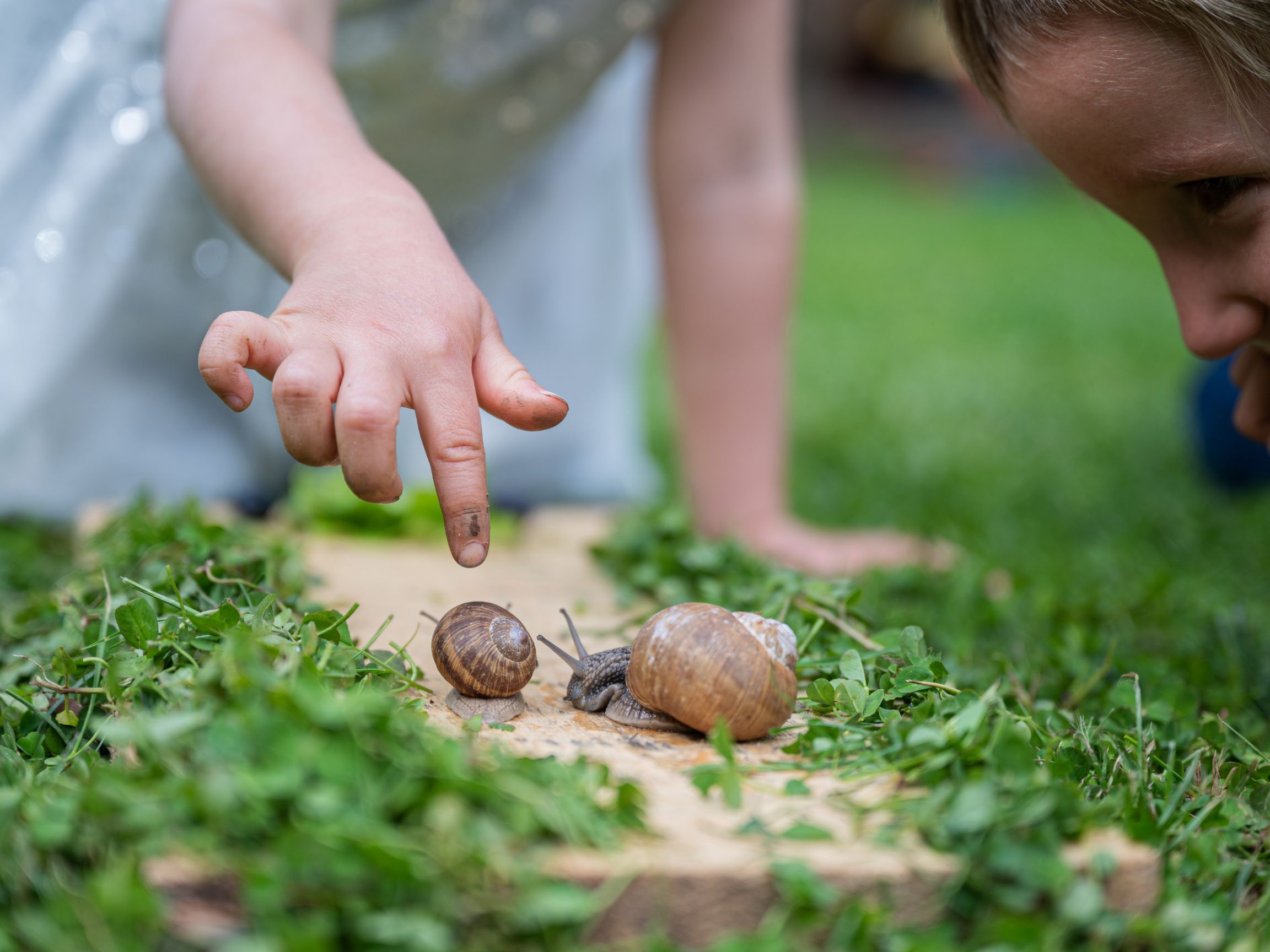
Part of the reason I think I love spending time with them is their sense of wonder. Children seem to notice everything. Their curiosity leads them to explore, question, and engage with their surroundings. Insects, clouds, puddles, strange sounds. Almost anything can capture their attention and spark their imagination.
Unfortunately, somewhere along the way, this wonder begins to disappear. As adults, we rarely stop to observe and enjoy. Wonder is gradually replaced by efficiency. We become focused on what needs to be done next, convincing ourselves that we simply don’t have time to pay attention to the small things anymore.
We begin to see wonder as something childish, a luxury that no longer fits into adult life. Yet wonder may be one of the most important ingredients for creativity, learning, and personal growth.
What Do We Mean by a Beginner’s Mind?
Beginner’s mind or shoshin, is a concept created by Shunryu Suzuki, which stems from Zen Buddhism. It involves setting aside assumptions and approaching something as if seeing it for the first time ever. For example, approaching experiences with curiosity, openness, and full attention.
This can be surprisingly difficult as adults. The more experience we gain, the easier it becomes to assume we have already seen, understood, or figured something out. A beginner’s mind encourages us to resist that tendency and remain open to new perspectives, insights, and possibilities.
In his book Zen Mind, Beginner’s Mind, Shunryu explains: “In the beginner’s mind there are many possibilities. In the expert’s mind there are few.”
How Adults Gradually Lose Curiosity, Awe and Wonder
There’s no need to feel guilty about this, it is something that, sadly, happens naturally.
As we grow, we start having more responsibilities, we have to start creating routines, meeting deadlines. We even have to schedule vacation and leisure. There just seems to be less time for it. With so many responsibilities competing for our attention, stopping to look around rarely feels like a priority, or even an option.
What we have to remember is that wonder often disappears not because the world becomes less interesting, but because we stop paying attention.
The Role of Routine, Distraction and Constant Productivity
Many of these challenges we have already discussed in Silent Focus, and almost all of them ultimately come back to the same thing: attention.
In previous articles, we have explored topics such as attention fragmentation, productive procrastination, and task switching. Although these may seem like separate issues, they all have something in common. They pull our attention away from the present moment.
Modern life encourages speed, efficiency, and constant productivity. We move quickly from one task to another and often feel pressure to fill every spare moment with something useful.
Wonder is almost the complete opposite. It requires slowness, it requires attention. Most importantly, it requires presence.
You cannot notice a bird singing if you are checking Teams messages. You cannot appreciate a beautiful landscape if you are scrolling through your phone while walking past it. You cannot be curious about the world around you if your mind is already focused on the next thing you need to do.
This is one reason why wonder can feel so rare once you are an adult. It is not necessarily that we lose our curiosity. It is just that our attention becomes so fragmented that we rarely give ourselves the opportunity to experience it.
Why Curiosity Matters for Leadership and Creativity
Curiosity, or wonder, is one of the most valuable skills a leader can develop.
In a world that changes constantly, leaders cannot rely solely on what they already know. They need to keep learning, adapting, and questioning. Curiosity is what makes that possible.
A sense of wonder encourages us to look beyond what is familiar, and what we see on the surface. It helps us notice opportunities others miss, challenge old ways of thinking, and remain open to new ideas. We can even go as far as to say that curiosity is the starting point of innovation.
The same principle applies to leadership. As we discussed in our article on strategic thinking, effective leaders need the ability to step back, observe, and see beyond immediate problems. Curiosity encourages this wider perspective. It helps leaders explore possibilities instead of simply reacting to circumstances.
Curiosity has been a driving force behind many of history’s most influential figures, from Albert Einstein and Steve Jobs to Alexander Fleming. Their discoveries and innovations began with a willingness to ask questions and explore the unknown.
Somewhere along the way, many of us stop doing that. Maybe it is because we live in a world where so much information is readily available. With answers only a few clicks away, it can sometimes feel as though everything has already been discovered, explained, or invented.
But that couldn’t be further from the truth. There will always be new ideas to explore, new questions to ask, and new perspectives to uncover. Every field still has room for innovation and discovery. In fact, the next breakthrough in your industry may come from someone who was simply curious enough to look at a familiar problem differently.
What Happens to the Brain During Awe and Wonder?
Now that we’ve talked about why curiosity is necessary in the workplace, let’s go back to why wonder is also extremely important in everyday life, in the small moments.
Until recently, there was little research on what wonder, and the feeling of “awe” meant in scientific terms. That feeling when you tap back into your inner child and really notice the world around you. When you see a beautiful landscape, a painting that resonates with you, or listen to a song that gives you goosebumps.
20 years ago Dacher Keltner started measuring what happens in the body in these situations, and the results will, ironically, leave you in awe:
First, there is a decrease in activity in your DMN, or Default Mode Network. The DMN is the part of your brain that is active when you are focused on yourself, thinking about your identity, replaying past events, worrying about the future, or mentally narrating your experiences. When you are in a state of awe, DMN activity decreases, quieting your brain’s internal monologue and creating a sense of mental relief.
At the same time, your body shifts away from fight-or-flight mode, lowering your heart rate and activating areas involved in self-reflection and emotional regulation.
Even more interestingly, this decrease in DMN activity can lead to what researchers call the “small self” phenomenon. During moments of awe, our usual concerns, worries, and preoccupations seem to shrink. We feel less self-focused and more connected to the world around us.
Experiences of wonder temporarily shift attention away from ourselves and toward something larger. This is one reason wonder can feel so restorative. For a brief moment, we stop obsessing over ourselves and reconnect with the wider world around us.
How Silence and Nature Help Restore a Sense of Wonder
Silence and nature are two of the most powerful ways to reconnect with a sense of wonder.
Silence removes many of the things that compete for our attention every day: notifications, conversations, endless information, and the pressure to constantly respond. Without this constant stream of input, the mind begins to slow down.
Nature offers something else. It surrounds us with beauty, complexity, and a different atmosphere than we’re used to. There is so much going on: vibrant colors, birdsong, insect sounds, wind, sun, running water. And yet, it is in no way overstimulating. It sometimes can even feel like a sort of “noise cancellation” from our inner turmoil and the outside world.
When these distractions are reduced, our attention naturally shifts outward. We start to notice details that would normally pass us by unnoticed. This is one reason many people describe feeling more curious, creative, and present after spending time in nature. They are not discovering something entirely new. They are simply paying attention again.
This is especially true during silent hikes. Walking alone or with a group in silence creates space for curiosity and exploration. During one of Heather’s monthly silent hikes in Barcelona, one participant became fascinated by an abandoned house along the route. She spent several minutes peering through the windows, wondering about its history, until a man who lived nearby approached her and invited her to take a closer look inside.
It was a simple moment, but it illustrates how wonder often begins with paying attention. Had the group been talking the entire time, she might never have noticed the house at all. Silence created the space for curiosity, and curiosity led to an unexpected experience.
Wonder often returns when there is finally enough space to notice what has been there all along.
Wonder Is Not Just for Children
Wonder is a skill we should practice our whole lives. We have to cultivate our curiosity so that we can grow. As people, it can help us destress, notice the beauty in life, and discover things about us and our surroundings we hadn’t noticed before. As employees and as leaders, it is a way to keep the job interesting, to venture new horizons, to always push forward, and to innovate towards a better future.
After all, the world never stopped being fascinating. We simply stopped paying attention.
Follow us on Instagram to learn more about curiosity, silence, and leadership @silentfocus.co, and if you like this style of content, join our newsletter.