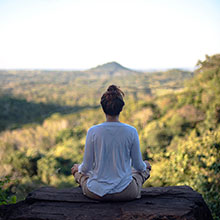

The Value of Stepping Away from Noise
Many articles in our blog posts start with a statement that often says something along the lines of: “Modern life is filled with constant noise, stimulation, and interaction and many people rarely experience true silence or solitude.”
One might say these introductions are starting to sound like a broken record, but we can’t help it. This is the reality. Silence has been associated with emptiness, and solitude with loneliness, however, none of those comparisons could be further from the truth. Silence and solitude are spaces where one can intentionally practice clarity, rest, and self-awareness.
Every day more and more people are becoming aware of the overwhelm and commotion of daily life, especially during the rise of the digital era where silence and solitude are scarce. However, they are also becoming aware that they don’t need to be stuck in it. This has led to the rise of meditation, wellbeing, exercise culture, and silent retreats, and understanding the importance of silence in a noisy world.
In this article we will talk about what silence and solitude really are, how they differ, their benefits, and how to practice them, and hopefully by the end you will see the reality behind these practices.
What Is Silence and Solitude?
According to the Cambridge Dictionary, these words are defined as follows.
Silence: a period without any sound; complete quiet.
Solitude: the situation of being alone without other people
Notice how none of the definitions have any negative connotations. Silence is merely the absence of external noise, which represents a state of stillness or quiet. Similarly, solitude is the state of being alone, often by choice, and typically characterized as a peaceful or constructive experience. It is a chosen time with oneself.
Differences Between Silence and Solitude
First, it is important to understand the difference between silence and solitude. As mentioned earlier, silence refers to the absence of external noise, while solitude is the state of being alone.
However, these concepts are not only external, they can also be experienced internally. On an inner level, silence becomes the quieting of mental chatter, while solitude becomes a sense of being undisturbed by external demands or distractions.
In this way, silence is not just about what we hear, and solitude is not just about being alone or who is around us. Both can be cultivated as internal states, regardless of the environment.
Relationship Between Silence and Solitude
It is also important to understand the relationship between silence and solitude.
These two states complement each other very beautifully. Silence supports mental clarity, while solitude supports self-reflection and independence. When combined, experiencing silence and solitude together can create space for deeper awareness, focus, and emotional reset.
Additionally, although they can exist independently, having one without the other can sometimes be counteractive. For example, solitude without silence can be noisy and chaotic if your mind is still racing with thoughts of the world. Similarly, silence without solitude can be difficult to maintain if constant interruptions from others interfere.
Therefore, it is good to understand the connection between both, and be able to manage it.
The Benefits of Silence and Solitude:
- Firstly, there is mental clarity and focus. When your mind is silent, and at peace, you can concentrate better which in turn means better mental clarity and focus, as well as improved decision making.
- Second, when you know how to silence your mind, and become undisturbed by external stimuli, you create a space where you can process your thoughts and emotions anywhere, anytime. This improves emotional balance, and therefore reduces stress as well as feeling overwhelmed.
- Third, quiet environments encourage new ideas. Many creatives have a personal studio where they can experience both silence and solitude.
- Fourth, similarly to the second point, silence and solitude help the body relax and support recovery from constant stimulation, in other words, they regulate the nervous system.
- Lastly, silence and solitude create space to reflect, to better understand habits, patterns and goals, and therefore promote self-awareness and personal growth.

The Importance and Beauty of Silence and Solitude
Silence and solitude can often be misunderstood as lonely and sad, they could also be interpreted as boring and uncomfortable. In reality, however, what they really offer is a space to reconnect with yourself and a break from constant input and expectations.
There is beauty in simplicity, clarity that comes from less noise, and a sense of feeling more grounded and present. Eileen Cary, a well-known singer has said “Solitude doesn’t mean escaping from the people I love. It means coming back to them better.”
This is truly what encapsulates what silence and solitude are about. When you step back and unplug, you notice things you miss when you rush. Not only that, but when you embrace solitude, you may realize you later have more to give. You might listen more patiently, react more calmly, and are more present.
How to Practice Silence and Solitude
Start small. Everything is easier to digest in smaller bites.
- Incorporate 5-10 minutes of quiet time daily, no phones no distractions.
- Create intentional space, every morning or evening have quiet time. This could mean sitting quietly in a comfortable position, or going on a relaxing nature walk. Even swimming can do the trick.
- Turn off your notifications and limit background noise. Try not to listen to any music or podcasts while you are doing activities such as making your bed, showering, or cooking. This leads to a lot more time reflecting and introspecting.
- Allow yourself to have mental stillness: observe your thoughts before reacting. This doesn’t mean “forcing” silence, it just means taking a little more time to process information and emotions.
At the end of the day, it is about consistency, not perfection. If you want to learn more about how to practice silence in your daily life, read this article from the Silent Focus team!
Silence and Solitude Retreats
Trying to incorporate silence and solitude into your daily life can be a challenge, but you could try a personal silent retreat to help you feel comfortable with being alone with your thoughts.
What these retreats offer are a structured time away from daily distractions, and a deeper immersion into silence and solitude. They have many benefits, such as making it easier to disconnect through a guided environment, allowing for a more profound reset.
Silent retreats provide a supported space to experience both silence and solitude more deeply.
Making Space for Silence
Once again, silence and solitude are not about isolation. They are tools for clarity, balance, and self-awareness. You can always start small and build gradually!
In a world that is constantly demanding attention, choosing moments of silence and solitude can be one of the most powerful ways to reconnect, reset, and move forward with greater clarity. You don’t have to earn rest. You don’t have to justify needing quiet. Practicing this is one of the kindest things you can do for yourself.
If you liked this article subscribe to our newsletter for similar content, and follow us on Instagram at @silentfocus.co.