
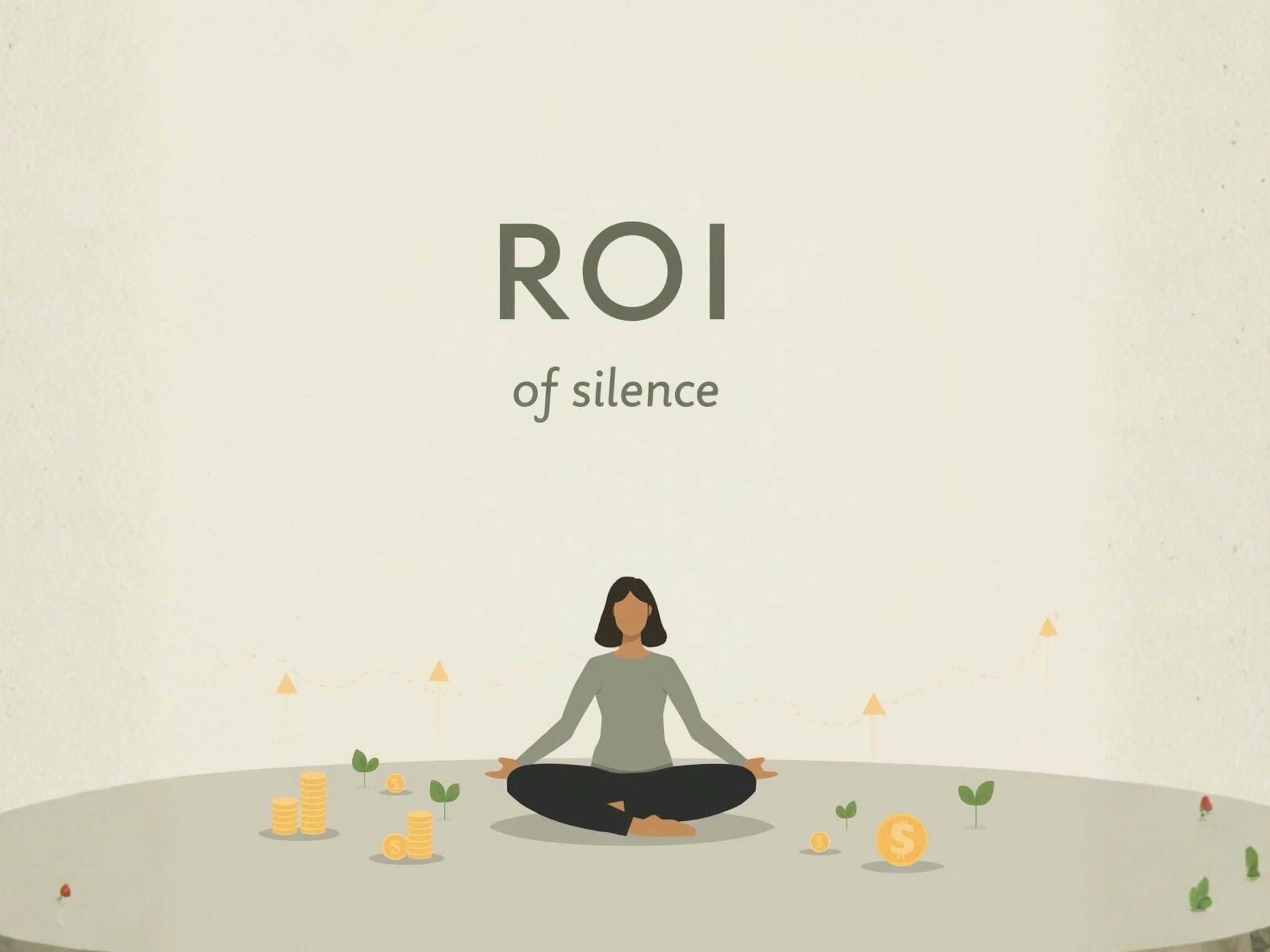
Rethinking ROI in the Modern Workplace
Burnout is no longer an individual issue, it has turned into a measurable business cost. Lost productivity, prolonged sick leave, and high employee turnover are forcing organizations to rethink how and where they invest in employee wellbeing.
That is why businesses are thinking outside of the box and organizing corporate retreats.
Return on investment is “a financial ratio that measures the profit generated by an investment relative to its cost”. In a workplace context this means time, money, productivity, retention, and leadership capacity. In this same context, a silent retreat becomes a preventative investment, not a reactive solution.
How companies measure ROI from a corporate retreat
Most companies don’t measure retreat ROI the same way they measure marketing or capex. Instead, they combine hard metrics, behavioral indicators, and qualitative outcomes tied to the retreat’s goals.
The chart below explains the 5 most common areas ROI can be measured:
| ROI Area | What Improves | How It’s Measured | Financial Logic |
| 1. Goal-Based ROI | Strategic clarity, leadership alignment, faster execution | Pre/post alignment surveys, time-to-decision, fewer reversals | Better decisions reduce costly rework and misallocated capital |
| 2. Performance & Productivity | Higher KPI attainment, faster projects, fewer meetings | OKRs/KPIs, revenue per employee, cycle time, meeting reduction (3–6 months) | Execution speed and efficiency increase operating leverage |
| 3. People & Culture | Engagement, retention, stronger managers, promotion readiness | Engagement scores, regretted attrition, manager effectiveness, internal mobility | Avoided turnover and stronger leadership bench reduce hiring cost and risk |
| 4. Behavioral Change | Shorter meetings, earlier conflict resolution, better delegation | Manager check-ins, 360 feedback, observed decision behaviors | Sustained leadership effectiveness improves long-term performance |
| 5. Cost Avoidance | Prevented misalignment, burnout exits, failed initiatives | Scenario analysis, retention tracking, initiative success rates | Avoiding one senior leader exit (≈1–2× salary) can justify the retreat |
Silent Retreats vs. Traditional Corporate Retreats
Many companies already invest in retreats, but question whether all retreats deliver true ROI. So, let’s compare. At a regular corporate retreat the focus is usually on connection, motivation, and team bonding, often through high-energy, social activities. You might find:
- A focus on motivation and social bonding
- Packed schedules with constant activities
- Team meetings and workshops
- Presentations from leadership
- Team-Building Activities
- Outdoor activities (hiking, sports, adventure courses)
- Group dinners and networking
- Cocktail Hour
- Often include late nights, alcohol, and high stimulation
While these retreats can be fun and create short-term connection, they often:
- Involve constant stimulation
- Leave little room for rest or reflection
- Result in participants returning to work mentally and physically tired
- Require a “recovery period” after returning
- Are a short-term morale boost, with limited long-term impact
This contrast is what highlights the value of silent retreats, which prioritize restoration, clarity, and sustainable performance rather than stimulation. Our retreats focus on:
- A focus on mental rest and clarity
- Structured periods of intentional silence
- Designed to reduce burnout and nervous system overload
- Emphasis on reflection, presence, and awareness
- Support long-term productivity and sustainable performance
- Strengthen leadership skills such as self-awareness and emotional regulation
- Encourage deep listening and thoughtful communication
- Build team connection through shared experience, not forced interaction
This way participants return to work rested, focused, and clear.
While after regular retreats the ROI is harder to measure beyond short-term engagement, silent corporate retreats are seen as a preventative investment that saves time and resources long-term.
Comparison chart of why corporate silent retreats have better ROI than traditional corporate retreats:
| Dimension | Traditional Corporate Retreat | Silent Corporate Retreat | How ROI Is Measured | Financial Effect |
| Primary Mechanism | Discussion, workshops, team bonding | Deep reflection, clarity before dialogue | Post-retreat alignment & decision confidence | Higher decision quality reduces costly missteps |
| Decision Quality | Can be reactive or consensus-driven | More deliberate, high-conviction choices | Strategy reversals, prioritization clarity | Better capital allocation, less rework |
| Execution After Retreat | Alignment may fade over time | Clarity persists into operations | Time-to-decision, execution speed, meeting load | Faster delivery and operating efficiency |
| Leadership Impact | Skill building and relationship strength | Self-regulation, awareness, burnout reduction | Retention risk, 360 feedback, engagement | Avoided executive turnover (≈1–2× salary) |
| Strategic Time Efficiency | Mixed social and strategic use of time | Highly concentrated strategic thinking | Output quality, initiative follow-through | More usable strategy per dollar invested |
Traditional corporate retreats improve morale and relationships while a silent corporate retreat improves decision quality, execution speed, and leadership risk which is where the real financial ROI lives.
The Real ROI: Burnout Prevention vs. Recovery
Now let’s talk numbers. Burnout, loss of focus, and a lack of perseverance in the workplace carry real financial and operational costs. When employees become overwhelmed, productivity declines, decision-making suffers, and absenteeism increases. In more severe cases, burnout can result in extended sick leave lasting several months, forcing organizations to redistribute workloads, delay projects, or invest time and resources into temporary replacements.
The short term investment of attending a 2-4 day silent retreat is minimal when compared to the long term cost of, for instance, a 4-6 month burnout-related leave. Think of the corporate silent retreat as a risk-reduction strategy. In the financial world it is known that investing time and resources now prevents far greater losses later, and clearly, the same applies here.

How Corporate Retreats in Silence Impact Productivity
Of course, outside of the financial benefits, there are many benefits of silence and solitude on cognitive function. For example:
- Improved focus
- Better decision-making
- Reduced mental fatigue
Stepping away from constant stimulation allows employees to reset mentally. This allows for clearer priorities and more intentional work upon return to the office. At the end of the day, productivity comes from clarity.
Leadership Development Through Silence
As a leader, one can also enhance their skills of:
- Self-awareness
- Emotional regulation
- Strategic thinking
Leaders who spend time in silence return with:
- Improved communication
- Greater presence
- More grounded decision-making
Growing as a leader has a direct impact on team performance and organizational stability. When leaders work on all the things listed above, they are better equipped to make thoughtful decisions. This “steadiness” sets a tone for the team, reducing reactivity and promoting a more healthy work environment.
Long-Term Organizational Benefits
All in all, these silent corporate retreats, through meditation and reflection can truly transform your company culture in the long term. Choosing a corporate retreat in silence is choosing to use the experience as a tool for sustainable performance, not temporary escape.
Investing in silence today protects your people, and your business, tomorrow.
Discover more about cultivating silence on our Instagram: @silentfocus.co