
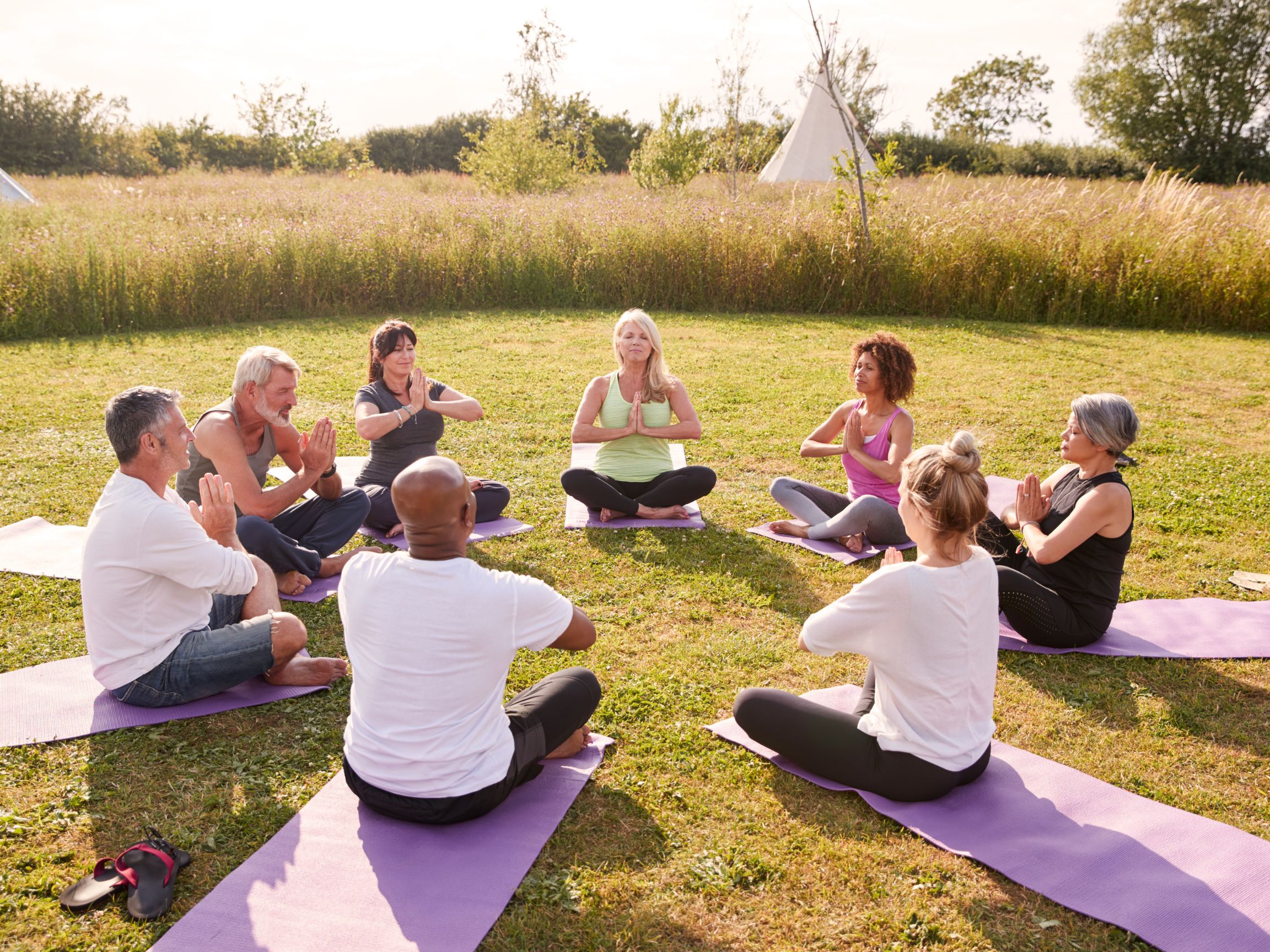
Silent retreats are for everyone, yes. However, how different personality types approach and navigate them can be different.
Silent retreats are powerful experiences with many benefits, but not everyone experiences silence in the same way. Your personality traits can influence how you respond to quiet, reflection, and extended silence. In this article we will explore how introverts, extroverts, neurodiverse participants and the different MBTI personalities can process this journey. Hopefully it will help you understand why and how a silent retreat can be transformative for different minds and how expectations might differ.
Understanding Personality and Silence
The way people gain energy, process stimuli, and seek connection affects how they experience silence. So first let’s explore the different personalities. The most organized way to look at this is through the 16 MBTI types. If you want to find out which one you are here is the official test. The MBTI personalities are divided by 5 personality aspects that, when combined, define the personality type.
Introverts
- An introvert is a person who is predominantly focused on internal thoughts and feelings rather than on external things or social interaction. They prefer solitary activities and get exhausted by social interaction. They also tend to be more sensitive to external stimuli.
- How they experience silence: Silent retreats are ideal for introverts because they offer a structured environment to recharge internal energy batteries, which are typically drained by constant social interaction. These retreats remove daily pressures and conversational obligations, allowing introverts to process emotions, deepen self-awareness, and experience profound mental, physical, and spiritual rest. We actually have a whole article about how corporate silent retreats benefit introverted employees, if you want to learn more.
Extroverts
- Extroverts prefer group activities and get energized by social interaction. They tend to be more enthusiastic.
- How they experience silence: Silent retreats can be a bit harder to get into for extroverts. However, if they ease themselves into it, it can bring many benefits. For example, helping them cultivate inner stillness, reduce, and break the habit of constant activity, leading to deeper self-awareness and improved emotional regulation.
Observant
- Observant individuals are highly practical, pragmatic and down-to-earth. They tend to have strong habits and focus on what is happening or has already happened.
- How they experience silence: For observants, silence is experienced as something concrete and stabilizing. Silence offers them a sense of order and presence, allowing them to reset, process what has already happened, and reconnect with what is real and immediate. Over time, this grounded form of silence can feel deeply reassuring, helping them feel centered, capable, and more at ease in the moment.
Intuitive
- Intuitive individuals are very imaginative, open-minded and curious. They prefer novelty over stability and focus on hidden meanings and future possibilities.
- How they experience silence: For intuitive individuals, silence lets them drift into abstract thought, contrary to the observants. They can explore inner insights, offering clarity, inspiration, and a deeper connection to their inner vision.
Thinking
- Thinking individuals focus on objectivity and rationality, prioritizing logic over emotions. They tend to hide their feelings and see efficiency as more important than cooperation.
- How they experience silence: For them, silence provides mental clarity and structure. Silence becomes a space for problem-solving and strategic thinking. The quiet allows them to recognize their inner reactions, without needing to put those feelings into words.
Feeling
- Feeling individuals are sensitive and emotionally expressive. They are more empathic and less competitive than Thinking types, and focus on social harmony and cooperation.
- How they experience silence: Overthinking for feeling individuals is very common, and initial quiet may feel unfamiliar or vulnerable, so it is important for them to first ground themselves in order to really reap this experience. For them, silence is often experienced as an emotionally rich and relational space. In this setting, they can process emotions gently, cultivate empathy, and restore a sense of emotional balance.
Judging
- Judging individuals are decisive, thorough and highly organized. They value clarity, predictability and closure, preferring structure and planning to spontaneity.
- How they experience silence: In a quiet environment, they often feel more in control and grounded, as silence supports reflection, planning, and intentional action rather than constant reaction.
Prospecting
- Prospecting individuals are very good at improvising and spotting opportunities. They tend to be flexible, relaxed nonconformists who prefer keeping their options open.
- How they experience silence: Without rigid schedules or constant input, prospecting individuals’ thoughts can move freely, allowing new ideas, insights, and possibilities to surface naturally. Silence gives them room to explore without pressure, often sparking creativity and helping them notice opportunities they might otherwise miss.
Assertive
- Assertive individuals are self-assured, even-tempered and resistant to stress. They refuse to worry too much and do not push themselves too hard when it comes to achieving goals.
- How they experience silence: For assertive individuals, silence often feels comfortable and steady. They tend to approach quiet moments with ease, using them to recharge and reflect without overthinking.
Turbulent
- Turbulent individuals are self-conscious and sensitive to stress. They are likely to experience a wide range of emotions and to be success-driven, perfectionistic and eager to improve.
- How they experience silence: Similarly to the feeling individuals, for the turbulent silence can feel more intense at first. Without external distractions, thoughts and emotions may surface more quickly, sometimes bringing self-doubt or restlessness. However, with time and guidance, silence can become a powerful tool for self-awareness and growth, helping them slow down, process emotions, and develop a more compassionate relationship with themselves.

Understanding Neurodivergence and Silence
Neurodivergence is also something to keep in mind when thinking how one would experience a silent retreat. Neurodivergence describes people whose brains function, learn, and process information differently from what is considered typical. It is a non-medical, umbrella term representing natural variations in human neurology. The spectrum is large. It ranges from differences in attention, to sensory processing, and emotional regulation.
Silent retreats, other than helping them step out of their comfort zone, have many benefits for these participants. For example:
- A quiet, natural environment helps regulate and reduce sensory overload and anxiety
- Predictable routines that ease cognitive strain
- Calmer environment for emotional regulation and executive function
- Silence removes the pressure of social conversation
If you are neurodivergent and are worried about your ability to sit and meditate, rest assured that since the meditation is structured, it will provide a calming and predictable framework for your mind.
For individuals with ADHD, OCD, or depression, extended silence may present unique challenges, and that is important to acknowledge openly.
- Individuals with ADHD: may find long periods of seated meditation particularly difficult. Sustained stillness can feel frustrating rather than calming. In these cases, participants can skip longer meditations and focus on movement-based practices, shorter meditation sessions, or structured creative activities can make the experience far more supportive and accessible.
- Those with OCD: may find that silence amplifies repetitive thoughts or compulsive mental patterns. Gentle grounding practices, creative outlets such as art or journaling (when appropriate), or guided structure can help provide balance.
- For individuals experiencing depression, especially moderate to severe depression: prolonged silence can sometimes intensify rumination or feelings of isolation. In these cases, it is strongly recommended to consult with a psychologist or mental health professional before attending a silent retreat. Silence can be powerful, but timing and readiness matter.
Silence is not about endurance. It is not about pushing through discomfort at all costs. A well-designed retreat should offer flexibility, support, and options, recognizing that what is healing for one person may feel overwhelming to another.
Embracing Silence Through Identity
In conclusion, silence is a powerful tool, but its impact varies by personality. It is very important to consider your own personality when preparing for the experience. In the end, silence doesn’t make everyone the same, it reveals the unique ways we think, feel, and connect.
Discover more about cultivating silence on our Instagram: @silentfocus.co